 ntis
Search is now two places
People still search Google — and more and more of them also ask ChatGPT, Gemini or Perplexity. Those assistants answer in their own words and mention a handful of businesses or pages. GEO is about being one of them.
Rank in the list of links
Search engines crawl your pages and rank them. Titles, descriptions, headings, speed and broken links all play a part.
Get named in the answer
AI assistants read your pages and decide what to say about you. Clear facts about who you are, direct answers to common questions and well-structured pages make that easier.
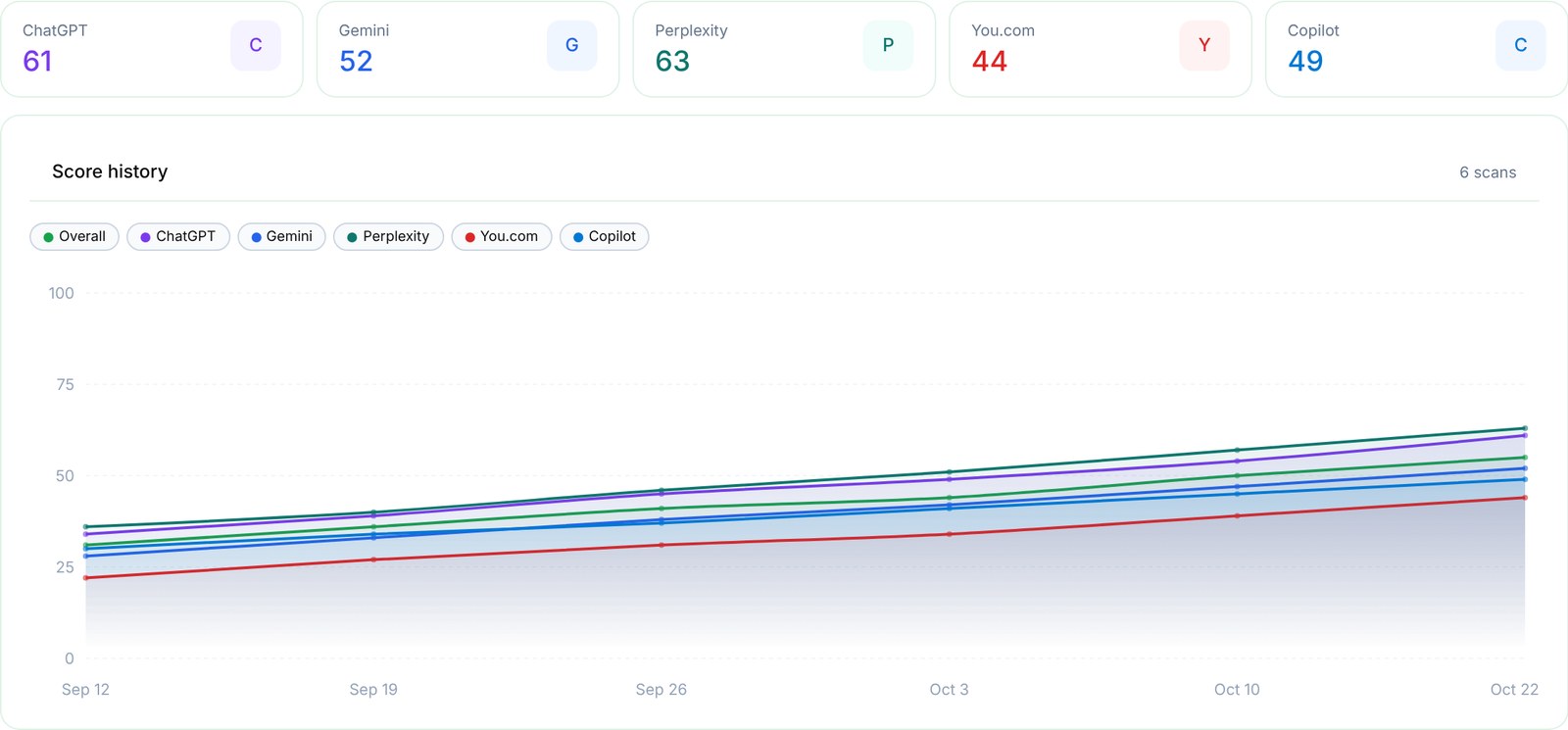
Five engines, five scores
Each assistant favours different things, so Mantis scores every page for each one. Your overall GEO score combines the five, with ChatGPT and Gemini counting most.
ChatGPT
25% of score- A clear H1 that names your main topic
- Plain definitions and direct answers
- Lists and named entities: your business, services, places
Gemini
25% of score- Schema.org structured data
- Canonical tags and a good meta description
- In-depth content that shows real experience
Perplexity
20% of score- Specific facts that can be checked
- Sources you cite
- A named author and a date on the page
You.com
15% of score- An FAQ section in question-and-answer form
- How-to guides
- H2 subheadings that each answer one thing
Copilot
15% of score- Fast load (under 3 seconds)
- Clean structure that works on mobile
- A clear purpose and a meta description
What moves a GEO score
Say who you are
Your business name, what you do and where you work, stated plainly — and in structured data (Schema.org) too.
Answer real questions
FAQ sections with question headings and a short, direct answer first. These are easy for assistants to quote.
Get the basics right
Titles, descriptions, headings, canonical tags and working links. Good SEO is the foundation of good GEO.
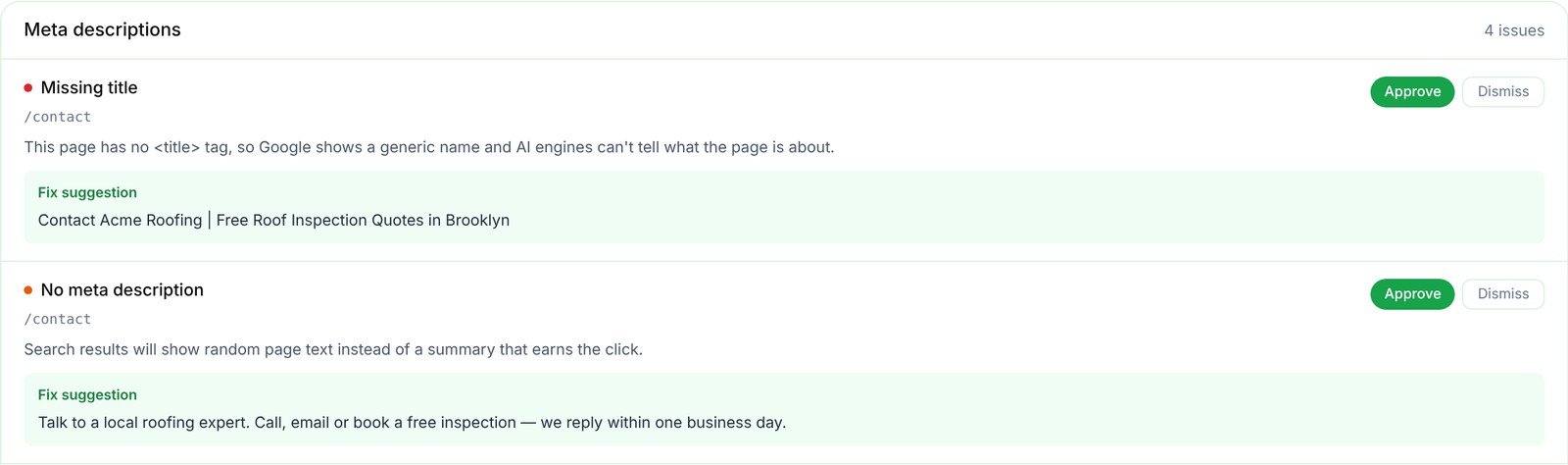
Mantis writes these fixes for each page. You approve them before anything changes.